
SEO Agency in Barcelona
Organic SEO: The Foundation of Sustained Growth
As well as our web design packages with SEO built in, we offer SEO consultancy and organic search optimisation for your current website
Guaranteed SEO Results and Their Impact on Sales
Many people ask whether SEO results can be guaranteed, and we do guarantee them in concrete terms: after analysing your case and selecting real keywords, we sign a contract guaranteeing minimum SEO results, with a refund clause. That shows how confident we are in the process. What’s more, organic SEO is the most effective long-term strategy for increasing sales and conversions on any kind of website (online shops, service businesses or corporate sites), because a well-planned SEO strategy drives a surge in qualified traffic.
Will SEO Change? How Do You Keep Up?
We’re constantly learning new SEO techniques and keep track, through many sources, of changes to Google’s algorithm. Both PANDA, which assesses content quality, and PENGUIN, which focuses on link quality, keep evolving, and Google now uses artificial intelligence to update its core. It sounds complex, and it is. But it’s the tools that let us analyse huge amounts of data to make campaign decisions, and stay well informed so we can act before it’s too late.
Do I Need to Rebuild My Website or Get a New One for SEO?
Again, every case needs analysing, but it’s fair to say that some clients come to us with very old, outdated websites that search engines find painful and simply don’t value. Running an SEO campaign on a site like that is always very hard. We like to say that if the dough is bad, no amount of sauce will make the pizza taste good. SEO is just the same.
Look, if your website is old, say more than ten years, runs on an unstable CMS, has messy code and content that isn’t geared towards SEO, the best thing is to start again. We specialise in building SEO-focused websites from scratch so we can then run an SEO campaign with great results and a dramatic increase in traffic and conversions.
Analysing a Professional SEO Campaign
From the audit we draw up an analysis, in other words the roadmap of changes your website needs, setting out how to reach competitive rankings with order and method. The campaign we run on your website is based on this analysis.
We Build the Keyword List for Your SEO Campaign
Before the campaign starts we agree the keywords your website will rank for across Spain or worldwide , usually between 10 and 20 keywords that customers will use to find your business, and for which the website will reach the first page at the very least .
These keywords are agreed with you, and some are also suggested by us.
Choosing this list carefully is vital, because our research tells us exactly which keywords we can realistically rank for and which bring plenty of traffic, so we know from the outset that our efforts are going into keywords that will pay off in the long run. Skipping research before an SEO campaign is a very common, and very costly, mistake.
Organic SEO: The Campaign
First, we start by analysing your website. The campaign lasts a minimum of one year and the necessary changes are made to the website gradually , with visible results two or three months after the SEO campaign begins.
We offer three packages for our SEO campaigns. All of them deliver results, but the second and third are faster: the more SEO work is done, the sooner the results come.
The Benefits of Organic SEO
SEO is different from advertising and from what’s called search engine marketing (paying Google to appear at the top). It’s a genuine way of offering relevant information to people who are looking for it. We always tell clients that Google started out as a search engine for “university assignments”, and much of its algorithm is still designed to give people the most relevant, useful information for their needs.
That often clashes with a business owner’s commercial mindset. To be honest, business owners don’t want to explain too much; they want to sell, get calls, convert and close deals to make their website pay. But you have to play the “relevant information” game, because people who want to buy are people first, human beings, and they have a problem they want to solve, which basically comes down to a lack of information:
- They don’t know which company can help them right now
- They don’t know where that company is, or in some cases whether it even exists
- They’re not sure what’s wrong or what the solution is
- They don’t know how things work in the field, the concepts and the world around the problem they want to solve
Plenty of other questions come up when someone searches for a service on Google. That’s why we have to provide relevant information for that person who’s trying to solve a specific problem. It always comes back to the same thing: the search engine is trying to give relevant information to someone with a problem. By creating this kind of content and these kinds of web pages, we achieve:
- More prestige and authority, plus the credibility that comes from customers seeing that a company knows what it’s talking about
- Our content sells for us, which saves a huge amount on traditional advertising
- Stable rankings that don’t depend on a regular injection of money, often a lot of it for a small business.
- Visits from organic search feel far more reliable and genuine than visits “forced” through advertising. The word “natural” itself helps sell. It’s an interested person visiting the page that could solve their problem, a more reliable starting point than advertising, which, as we all know, can even be annoying
As we mentioned, depending on the strategy, we can combine marketing with paid advertising (Google Ads) and SEO. They’re not at odds at all; in fact it’s often necessary, depending on the product or service and how quickly you need a return on investment.
You’ll Like the Reports from Our Current SEO Clients
You’ll be glad to know that all our SEO clients are happy with their results. We can also send you reports of their results so you can see how they’re doing with us. We even encourage you to call them and ask how their SEO campaign with ALEXMULTIMEDIA is going. Just ask us for the reports.
An SEO campaign has to be monitored every month: what isn’t measured gets out of hand and goes who knows where. To improve, you need to measure keyword results regularly, keep optimising the website and always analyse what your competitors are doing. That’s why the SEO reports we produce regularly are so important. If you’d like to see what our campaign reports look like, get in touch and we’ll show you SEO studies we’ve prepared for our clients.
So our SEO campaigns always come with monthly reports, meaning the client is always properly informed about the results and direction of the campaign.
Our monthly reports cover:
- A list of the keywords we’re working on
- An analysis of the SERP results, that is, where those keywords rank in the search engines
- An analysis of the traffic your website is getting, first with Google Search Console and then with Google Analytics
- A comparison with the previous month to measure traffic growth
- An analysis of the keywords bringing the most traffic and new opportunities we can take advantage of
- A conclusion to steer the campaign towards more of your goals
Every month you’ll receive a PDF with your SEO campaign report, which gives you:
- Opportunities identified: analysing the monthly reports uncovers new ways to improve your website’s rankings, in a cycle of constant improvement
- Strategy adjustments: if results aren’t as expected, the monthly reports let us adjust the strategy and change SEO tactics to improve performance
- ROI assessment: the monthly reports help you assess the return on investment (ROI) of your SEO campaign and see whether it’s delivering the expected benefits
- Effective communication: monthly SEO reports keep communication flowing between you and the SEO team, building trust and transparency
- Technical issues identified: the monthly reports also flag technical issues that may be affecting your website’s performance and rankings, so they can be fixed
- Continuous optimisation: monthly SEO reports allow continuous optimisation of your website, improving the user experience and increasing traffic and conversions
As you can see in the image above, this is a page from one of our monthly reports for one of our SEO clients, Cristalería Diagonal, a glazier in Barcelona that ranks at the top for glazing, enclosures, skylights, COVID protective screens and more.
As you can see, we’re reporting that two keywords we added to the campaign (related to installing COVID protective screens) are still ranking in first position across Spain, after analysing the traffic with Google Search Console. The report then goes on to analyse which keywords have brought the most traffic to the website.
All this data gives both the client and us confidence that the actions in the SEO campaign make sense, with a real result that we ultimately measure in conversions.
For a Good SEO Campaign, Contact Us as Early as Possible. Here’s Why
With SEO, it’s best to contact us as early as possible, even before you buy your domain, and we’ll explain why.
Your choice of domain name DOES affect SEO. It’s true that Google, for example, doesn’t pay much attention to whether there’s a keyword in the domain name, but people do, and when they link to your domain from their blogs or websites, the link will automatically contain the main keyword we choose for the domain name.
A simple, real example from one of our clients is Cristalería Diagonal. The domain name is ‘cristaleriadigonal.com’, which contains a very important keyword: ‘cristalería’ (glazier). That first helps people confirm that the domain they see in the results matches what they were looking for, say, a glazier in Barcelona: when they see ‘cristalería’ in the domain, it gives them real confidence that this is the result they want and that it’ll solve their problem quickly.
On the other hand, if someone copies and pastes our URL into a blog or website, editors such as WordPress or Drupal will usually create a text link containing the keyword ‘cristalería’ pointing to our site. That’s a very precise link that improves our ranking for ‘cristalería’, and we didn’t have to do anything to get it.
When we get the chance to advise on buying the domain name, it’s one more advantage for your future SEO campaign, because in SEO everything counts. It’s a complete optimisation job that starts before you even buy a domain for your website.
It’s also important not to be afraid of letting a domain lapse and switching to a more suitable one, because the age of a domain does NOT affect SEO these days.
You Need an HTTPS Certificate from Day One for a Good SEO Campaign
These days an HTTPS certificate is an absolute must for a good SEO campaign. And if your website has any kind of shopping cart, whether you sell products, digital products or services, very few potential customers will buy without one.
It’s Better to Have an SEO Specialist Build Your Website. Here’s Why
Yes, really. But why? Because one of the most important SEO factors is how fast your website loads, known as WPO. I can’t tell you how many projects first build a website with serious WPO problems and poorly structured information, and only then try to rank it. That’s like trying to win a Formula 1 race in a family car, fly from Barcelona to New York in a light aircraft or reach the moon by jumping off a trampoline.
The problem is that once a website is built, it’s harder to optimise it than to create a new one. It depends on the project, of course, but after more than a decade doing SEO we’ve come across these cases again and again, and have had to heavily optimise the technical side of websites built in WordPress, Drupal and other systems that weren’t properly compressed or structured, used technically poor templates or simply had terrible usability.
WPO matters a lot for CRAWL BUDGET, which is how long a search engine bot takes to crawl your whole website. Keeping that time reasonable is very important for SEO, because search engines naturally reward sites that give them less work.
That’s why, before starting any SEO campaign, we always carry out an audit, analysing the website technically (if there is one) and how to improve it for SEO.
CTR and Copywriting: Vital for SEO
CTR matters a lot in SEO. CTR is the click-through rate, the number of clicks per impression your website gets in search results. We mention it because it’s important to know that meta descriptions don’t directly affect SEO, but they do affect human users, who are more drawn to clear, conversion-focused descriptions and will click on them more. That raises your CTR, which also helps your rankings, so we believe it’s really important to write good copy for your titles, descriptions and all your website’s metadata.
In SEO terms, CTR is a key metric that search engines take into account when assessing how relevant and high quality a web page is. A high CTR shows that the page’s content is attractive and useful to users, which tells search engines the page deserves more visibility in the results.
Besides meta descriptions, other elements can also influence CTR and therefore a page’s rankings. Page titles, for example, play a key role in catching users’ attention in the search results. A well-optimised, relevant and compelling title can significantly increase the chances of people clicking the link.
Rich snippets can also make a web page stand out in the search results by showing extra information, such as ratings, reviews, images or structured data. These rich snippets often generate more interest and trust among users, which can lead to a higher CTR.
So optimising elements such as meta descriptions, page titles and rich snippets can influence CTR and improve a page’s position in the search results. Careful attention to copywriting and metadata optimisation can lead to more visibility, more traffic and a more successful SEO strategy.
Why Website Architecture Matters for SEO
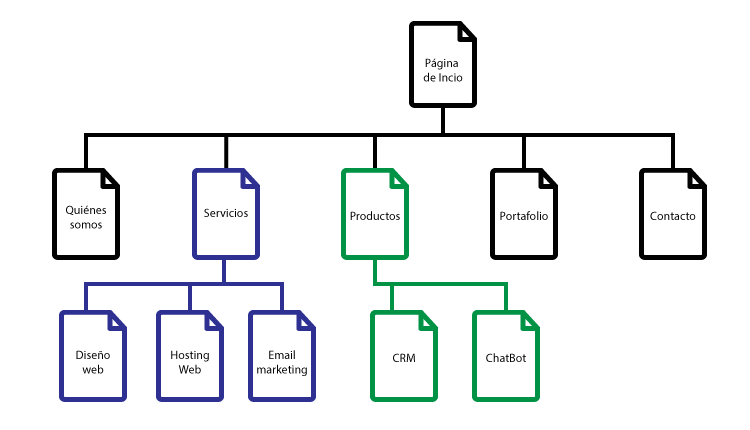
A website’s architecture plays a fundamental role in SEO, because it directly affects how search engines interpret and rank its content. A well-structured, optimised architecture makes it easier for search engines to index, navigate and understand the content, which in turn helps you rank for more relevant keywords.
Here are some key considerations for an ideal website architecture that maximises keyword rankings:
- 1. Hierarchical structure: We organise your website in a logical, hierarchical structure that reflects how the different sections and pages relate to each other. We use folders and subfolders to group related content and internal links to connect these sections. This makes navigation easier and helps search engines understand your site’s structure.
- 2. Friendly URLs: We always use descriptive, friendly URLs for your website’s pages, including relevant keywords so they’re clear and meaningful for both users and search engines. We avoid long, confusing URLs containing numbers or special characters.
- 3. Internal links: We create a network of internal links within your website to connect relevant content, using keywords as anchor text to help search engines understand the topic and relevance of the linked content. This also makes it easier for users to get around the site and improves the user experience.
- 4. Optimised folder structure: We use a well-organised folder structure to group and categorise content, placing the most important pages at the top levels so they’re easier to reach and find for both users and search engines.
- 5. XML sitemap: We create an XML sitemap and submit it to the search engines. This file lists all the important pages on your website and helps search engines discover and crawl your content more efficiently.
- 6. Load speed: We make the improvements needed for your website to load quickly. Load speed is an important SEO factor and can affect the user experience. Optimise images, use file compression and keep unnecessary scripts and plugins to a minimum to improve load times.
Remember, a well-optimised website architecture isn’t just good for SEO but for the user experience too. By creating a logical, easy-to-navigate structure, we help users find the information they’re looking for and improve the site’s usability. That in turn makes users more likely to engage with your content and take the actions you want, such as becoming customers or sharing your content, which can also have a positive effect on your keyword rankings.
In SEO, keyword density refers to how often a specific keyword appears in a piece of content compared with the total number of words (readable text, not code). It used to be believed that high keyword density was a deciding factor for search rankings, but today’s search algorithms have evolved and focus more on relevance and natural-sounding content than simply counting how many times a keyword is repeated.
It’s important to understand that keyword density is no longer the only factor that matters in SEO, and overusing a keyword beyond the recommended density can be seen as “keyword stuffing“, which can harm your website’s rankings.
Rather than focusing only on keyword density, it’s more important to follow these best practices:
- Carry out thorough keyword research to identify the most relevant keywords with the least competition in your niche or industry.
- Work keywords in naturally and consistently throughout the content, using synonyms, variations and related phrases.
- Prioritise high-quality content that’s relevant to users, focusing on providing valuable information and solving their problems.
- Make sure the content is well structured and flows logically, using headings, organised paragraphs and the right tags.
- Focus on the user experience and provide content that’s easy to read and understand.
So keyword density is no longer the main SEO factor. That’s why at ALEXMULTIMEDIA we focus on relevance, quality and natural content. By providing valuable information and adapting to users’ needs, we improve their experience and increase your chances of ranking well in the search engines.
Why Rich Snippets Matter for SEO
We always use rich snippets in our SEO work. Rich snippets are extra elements shown in search engine results that give more detailed, visually appealing information about a web page’s content, such as ratings, reviews, prices, recipes, events, products, questions and answers, and more.
Rich snippets can have a positive impact on SEO for several reasons. First, they make a search result more visible and attractive by highlighting relevant information in more detail. That can catch users’ attention and make them more likely to click your link rather than a competitor’s.
Rich snippets also help search engines understand a page’s content better. By providing specific, structured data in rich snippets, we make it easier for search engines to interpret and rank your content accurately.
Another benefit of rich snippets is that they can give users a stronger sense of relevance and quality. By showing extra, useful information in rich snippets, you show that your page offers detailed, valuable content. That can increase users’ trust and their willingness to click on your result.
In our experience they also improve the user experience by giving quick, relevant information directly in the search results. Users get answers to their questions without having to visit the page, which speeds up their search and makes them happier. So rich snippets are extra visual and descriptive elements shown in the search results. They help SEO by increasing visibility, helping search engines understand the content, signalling relevance and quality, and providing a better user experience. Implementing rich snippets properly can have a significant impact on your rankings and on the traffic you get from the search results.
International SEO and Why HREFLANG Tags Matter
Hreflang tags (hypertext reference language) are attributes in a web page’s HTML code that tell search engines the language and specific geographical location of that content. They’re essential in international projects where you want to serve users the right version of your content for their language and location.
Hreflang tags matter in SEO because they improve the user experience and the relevance of search results. Used properly, hreflang tags help search engines understand which version of the content is most relevant to users who speak a particular language or are in a particular location.
That brings several SEO benefits. First, hreflang tags help avoid duplicate content problems. By clearly telling search engines which version of the content to show depending on language and location, you avoid duplicate content penalties and make sure every user gets the most relevant version.
They also make search results more precise and better targeted: when search engines understand which version of the content is relevant to each user, they can show more accurate, specific results. That helps increase your website’s visibility in international markets and attract a more suitable audience.
Indexability and the Files That Control It
The robots.txt file and the sitemap.xml file are two important elements for a website’s SEO. Robots.txt is a text file in the root of a website used to communicate with search engine crawlers. It lets website owners tell crawlers which parts of the site they can and can’t crawl.
The robots.txt file affects SEO by controlling search engines’ access to certain pages or sections of the website. If it’s set up wrongly, it could block important pages or allow access to pages you want to keep hidden. So it’s essential to manage this file properly, making sure the pages you want indexed are available to search engines and that private or unwanted pages are blocked.
The sitemap.xml file is an XML file containing a list of all the important pages and resources on a website. It gives structured information about how the site is organised and helps search engines discover and index all the relevant pages easily. It helps SEO by making it easier for search engines to index all of a website’s important pages. By providing a clear, complete map of the site’s structure, it helps ensure every relevant page is crawled and considered for indexing.
The robots.txt file controls which parts of the website can be crawled, while the sitemap.xml file provides a map of all the pages to make indexing easier. Search engines check robots.txt for crawl restrictions before using the sitemap.xml to discover all the pages.
We recommend creating the robots.txt file first and the sitemap.xml file second. Robots.txt controls which parts of the website can be crawled, so it’s important to set the right rules to allow access to the relevant pages before search engines try to crawl them.
Once robots.txt is set up correctly, you can create the sitemap.xml file and submit it to the search engines. That makes sure the important pages are available for indexing and improves your visibility and rankings in the search results.
I Have an Online Shop. Can You Rank All My Products with SEO?
Of course, and we have a strategy for it.
Lately we’ve seen that many online shops are built on endless product listings with almost no descriptions. That’s a big problem. Here’s how it usually goes:
- The client has an idea for an online shop and wants it to earn a living so they can leave their boring job.
- They have some savings but don’t want to spend much on the shop, so a friend builds it with one of the best-known frameworks, such as PrestaShop, or perhaps they use a service like Shopify
- They then add all their products to the shop and wait, but not much happens. They thought they’d simply start selling, as they’d read or seen in the ads, but that’s not how it works.
After asking about the figures of more than 400 online shops in Spain (Rebeldes Marketing Online), the vast majority don’t cover their costs and 97% fail. So, technically, if you don’t do something different, your online shop is likely to fail like all the others.
To build an online shop that works, you first need to have it built by a professional company. Spending very little on the shop, thinking you just put it online and that’s it, is the first obstacle. One of the most damaging things is knowing nothing about SEO. If the client hasn’t looked into it at all, they won’t know which technologies are slower and worse for SEO. Nor will they know whether the company is just going to build them “yet another online shop” to put online and invoice, or genuinely build one designed to actually work.
Remember that most agencies are just that: businesses that need to invoice and make a healthy profit to keep their staff and pay their fixed costs. So if the client isn’t on top of every detail of their online shop, they’ll usually be handed a standard shop with no real ability to sell online. It’s like buying a car that doesn’t move or a Ferris wheel that doesn’t turn.
To create a technically successful online shop from the start, there are several key aspects to consider so it ranks well in the search engines and attracts customers who actually buy. Here’s a basic guide to get started:
- Choosing a platform: You need a solid e-commerce platform. Popular options include WooCommerce (for WordPress), Magento, BigCommerce and PrestaShop. We also have our own system that we use to get online shops ranking as well as possible, and it’s often the best choice. The right choice depends on your specific needs and budget.
- Web design: Design an attractive, easy-to-use website. Make sure it’s responsive, adapting to different screen sizes, because lots of users shop from mobile devices.
- Speed optimisation: Website speed is crucial for SEO and the user experience. Compress images, keep unnecessary scripts to a minimum and use good hosting. Most agencies skip this step, completely ruining any chance of SEO for that website and, with it, any future sales.
- SEO: Optimising your website for search engines. This includes keyword research, optimising meta tags, creating quality content and improving load speed.
- Security: Use an SSL certificate to encrypt information and consider additional security measures.
- User experience: Make it easy to browse and find products, with clear categories and tags, high-quality images and detailed product information.
- Simple checkout: Offer several payment options and make sure checkout is easy and secure. Customer trust is essential.
- Stock management: Keep accurate control of your stock to avoid running out or overstocking.
- Mobile optimisation: Make sure the online shop works perfectly on mobile devices, as more and more people shop from their phones.
- Social media integration: Let users share products on social media and make sure you’re present on the platforms where your audience is.
- Data analysis: We use web analytics tools such as Google Analytics and Google Search Console to monitor traffic, conversions and user behaviour, so you can make data-driven adjustments.
- Continuous optimisation: SEO and conversion optimisation are ongoing processes. We keep making improvements based on the data and market trends.
- Online marketing: Implementing online marketing strategies such as social media advertising, email marketing and content marketing to attract traffic and turn it into sales.
- Customer service: Provide excellent customer service. Meet delivery times, reply quickly to enquiries and solve problems efficiently.
- Legal compliance and policies: We make sure you comply with all the legal requirements, such as privacy and consumer protection laws.
Your online shop also needs the right structure. Once the shop is built as described, you need to create a category structure that covers users’ different search intentions. For example, a user searching for “trainers” isn’t the same as one with a stronger intention who’s searching for “running trainers”. And then there’s the person ready to buy (a transactional keyword) who searches for “buy marathon running trainers”.
That’s why we guide users through each stage of their search towards what they want to buy. So we need to create different categories, from the most generic ones for people who don’t yet know what they want to the more specific ones for people with strong buying intent.
On the other hand, product description text is very important. A big problem is that most people who build an online shop, and even large companies, pay little attention to it. It’s such a common mistake that it’s the first thing we check when an online shop has ranking problems. Product descriptions are fundamental. Without a clear, well-organised approach to them, the website won’t sell anything.
A Basic SEO Guide to Writing Product Descriptions for an Online Shop
Here’s a short guide to how we usually write product descriptions:
Keyword research:
- Before writing a description for a product, research relevant keywords for it using tools such as Google Keyword Planner, Semrush or Ahrefs.
Product title:
- Make sure the title includes the main keyword clearly and concisely.
Description structure:
- Organise the description logically, with short paragraphs and headings where needed.
Detailed description:
- Give complete information about the product, highlighting the benefits and features that matter to the customer.
Persuasive language:
- Use language that convinces customers your product is the best option on the market.
Keyword optimisation:
- Work keywords into the text naturally, avoiding keyword stuffing.
Images and multimedia:
- Accompany the description with high-quality images and descriptive ALT text.
Price and availability:
- State the price and availability clearly and keep them up to date.
Customer reviews and ratings:
- Show reviews from previous customers and product ratings where available.
Call to action (CTA):
- Include a clear call to action that invites the customer to act, such as “Buy now” or “Add to basket”.
Mobile optimisation:
- Make sure the description is readable and works well on mobile devices.
Regular updates:
- Keep your product descriptions up to date with accurate, relevant information.
Page load speed:
- Make sure your website loads quickly, as page speed affects SEO.
Avoid duplicate content:
- Write unique content for each product and avoid copying and pasting descriptions from other websites.
Professional SEO Suites
At AlexMultimedia we use a fairly extensive set of tools to do our job as SEO professionals. In this section we explain, one by one, the most important tools we use to get our results in the search engines. To start with, to run audits, track campaigns and carry out countless other tasks, as SEO experts we need one or more SEO SUITES.
SEO suites, also known as all-in-one SEO tools, are comprehensive platforms designed to help digital marketers, website owners and SEO specialists manage and improve their websites’ visibility in search engines. Here’s an overview of some of the most important SEO suites on the market.
SEO: Frequently Asked Questions
Yes, in concrete terms: after analysing your case and choosing real keywords, we sign a contract with minimum results and a refund clause.
A technical analysis of your website (errors, broken links, code), of your content against your keywords, of your backlinks and of your competitors.
SEO is a medium to long-term strategy, and in the initial audit we tell you what timescales are realistic for your keywords.
Yes. We rank websites in different languages to reach international markets.
SEO gets you ranking in search engines like Google, while GEO gets assistants such as ChatGPT or Gemini to cite you in their answers. We work on both at once.
Yes. We run SEO campaigns entirely in English: the audit, keyword strategy, monthly reports and every call. We can also optimise your website for English, Spanish and Catalan searches at the same time, which matters if your customers include locals, expats and tourists. We already work with clients abroad, including in the United States.
Yes. Many people in Barcelona search in English, for example “dentist Barcelona” or “lawyer Barcelona English speaking”. We research those exact searches, create or optimise English pages for them and set up the hreflang tags so Google shows English speakers your English page and Spanish speakers your Spanish one.
It depends on how competitive your keywords are and how much work your website needs. We offer three SEO packages, and the faster ones include more work each month. After the initial audit we send a fixed monthly price, and campaigns run for a minimum of one year because SEO needs time to deliver.
Yes. For businesses that serve customers in Barcelona, Girona or the Costa Brava, local SEO is often where the quickest wins are. We optimise your Google Business Profile, local pages and reviews strategy so you appear in the map results for searches near you, in each language your customers use.
Yes. You don’t need an NIE or a Spanish company. We invoice your company with its details in its own country, and invoices to businesses in other EU countries or outside the EU are normally issued without Spanish VAT, in line with the law. SEO work is done remotely, so location isn’t a problem.
Before the campaign we agree real keywords and minimum results with you, and put them in the contract with a refund clause. If those minimums aren’t met within the agreed period, the refund clause applies. We’d rather guarantee realistic results than promise first place for everything.
You can see real results from our clients in our guide SEO and GEO: how to win clients from Google and ChatGPT.
Last updated: